Instacart
Creating the first Instacart and CPG e-commerce experience.
Content strategy | UX writing | Content modeling
Job to be done
Help P&G communicate its Free Delivery offer and drive product sales to Instacart with a flexible retailer-templated microsite.
Approach
The ask was simple: create tiers of evergreen and media-driven microsite templates to be used across multiple brands and campaigns to spread awareness about P&G’s free offer while driving conversion on Instacart.
But, after initial platform evaluation and user journey mapping, I quickly realized there would be a huge UX block to connecting the digital journey from product to product: the Instacart user experience is dependent on a signed-in/signed-out account status as well as digital shelf location settings, so a successful user experience from the static content microsite to a dynamic one was reliant on the user’s previous interaction with Instacart and their device settings and not a media path.
Additionally, direct linking to the brand product or category page wasn’t available, presenting immediate fall-off friction once a user was on Instacart. An add-to-cart API integration helped to solve this UX problem for some retailers but wasn’t a core feature of the product nor scalable.
Strategy
Since this site was the gateway for an external user into Instacart’s conversion funnel, ensuring clear communication on the microsite and providing the user with what they needed to know once they landed on Instacart from the microsite was the biggest content opportunity.
Step 1: Defining Content Strategy and Content Elements
I first defined the content strategy objectives and identified a user persona and the key communication needs across each scenario. I then defined and modeled key content elements needed. This accounted for components of the program that were not evergreen and would be displayed on the website intermittently throughout the year.
Step 2: Content Mapping
I then collaborated with the product designer and developer to define and document requirements and developed content mapping that would guide the content configuration files.
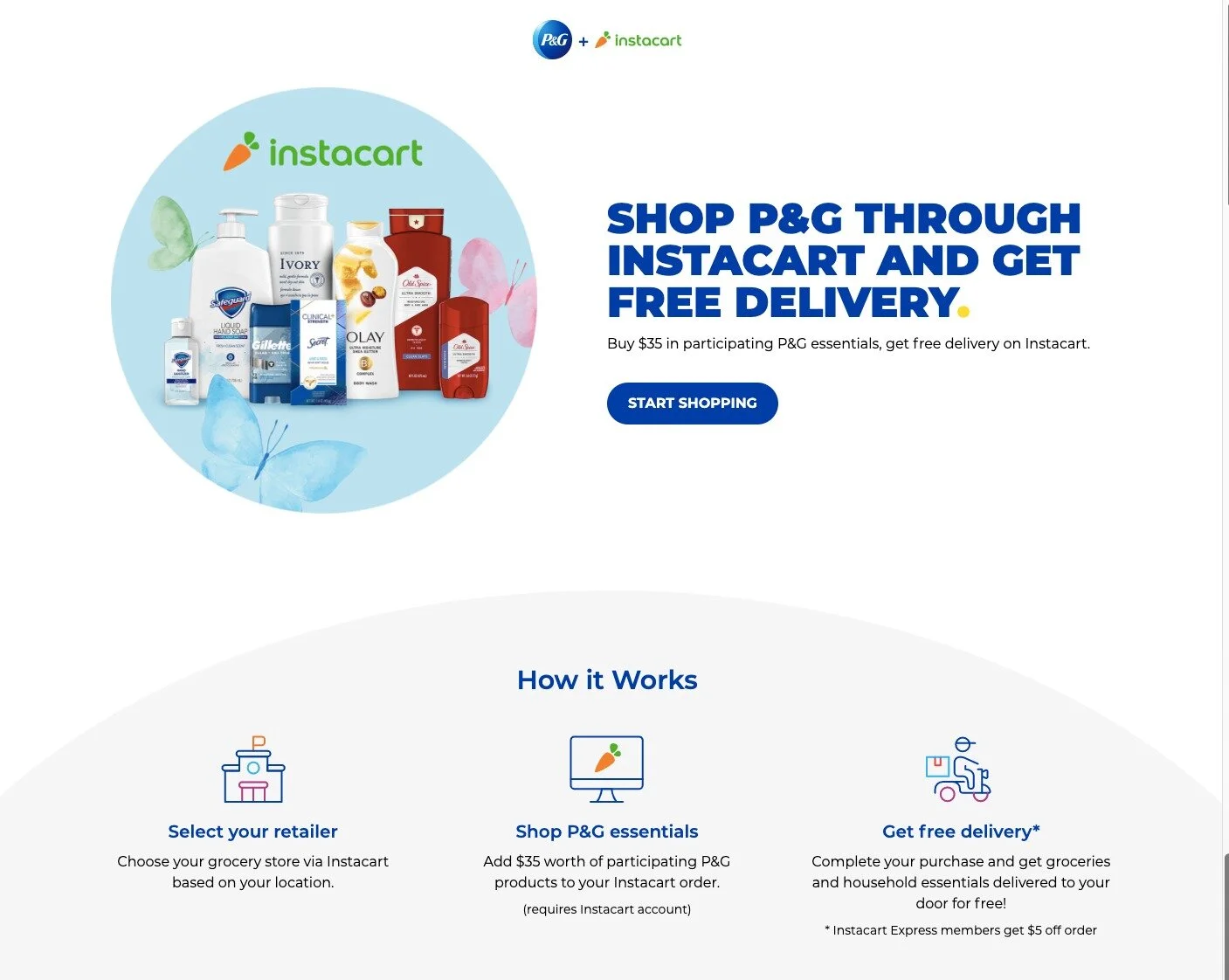
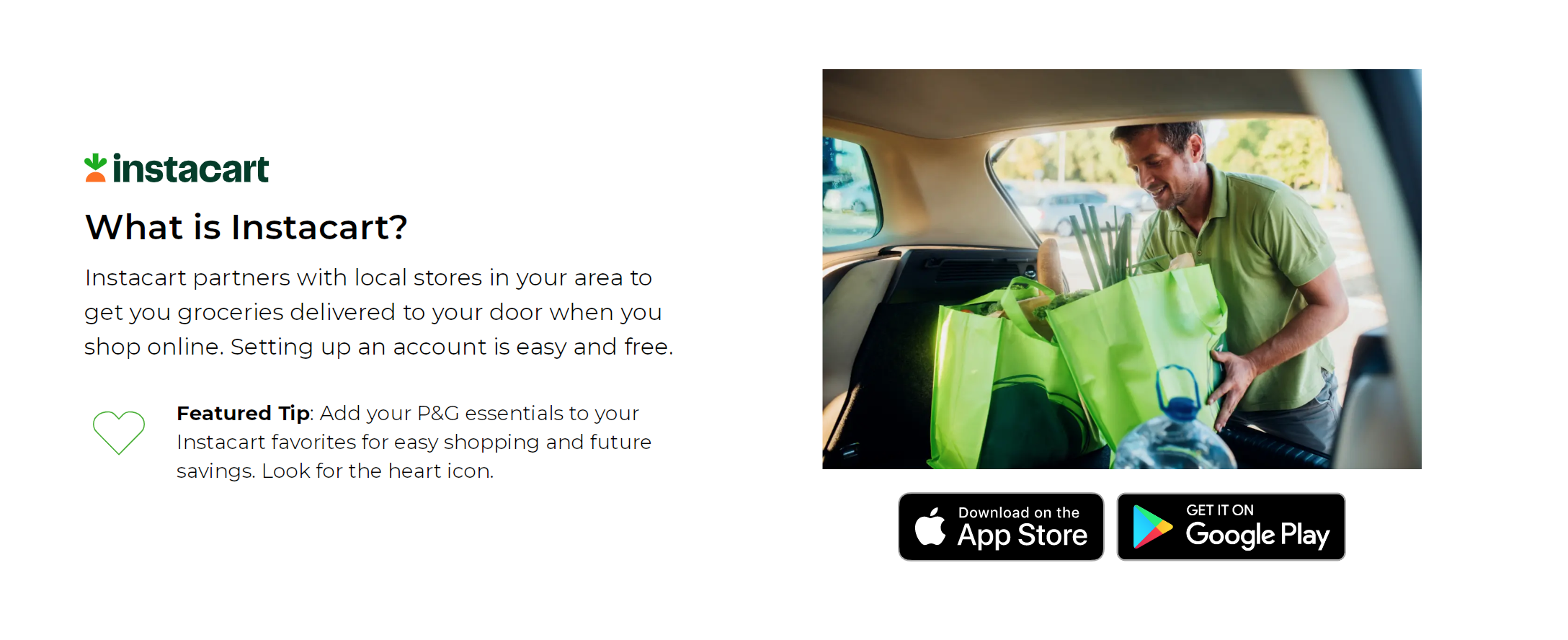
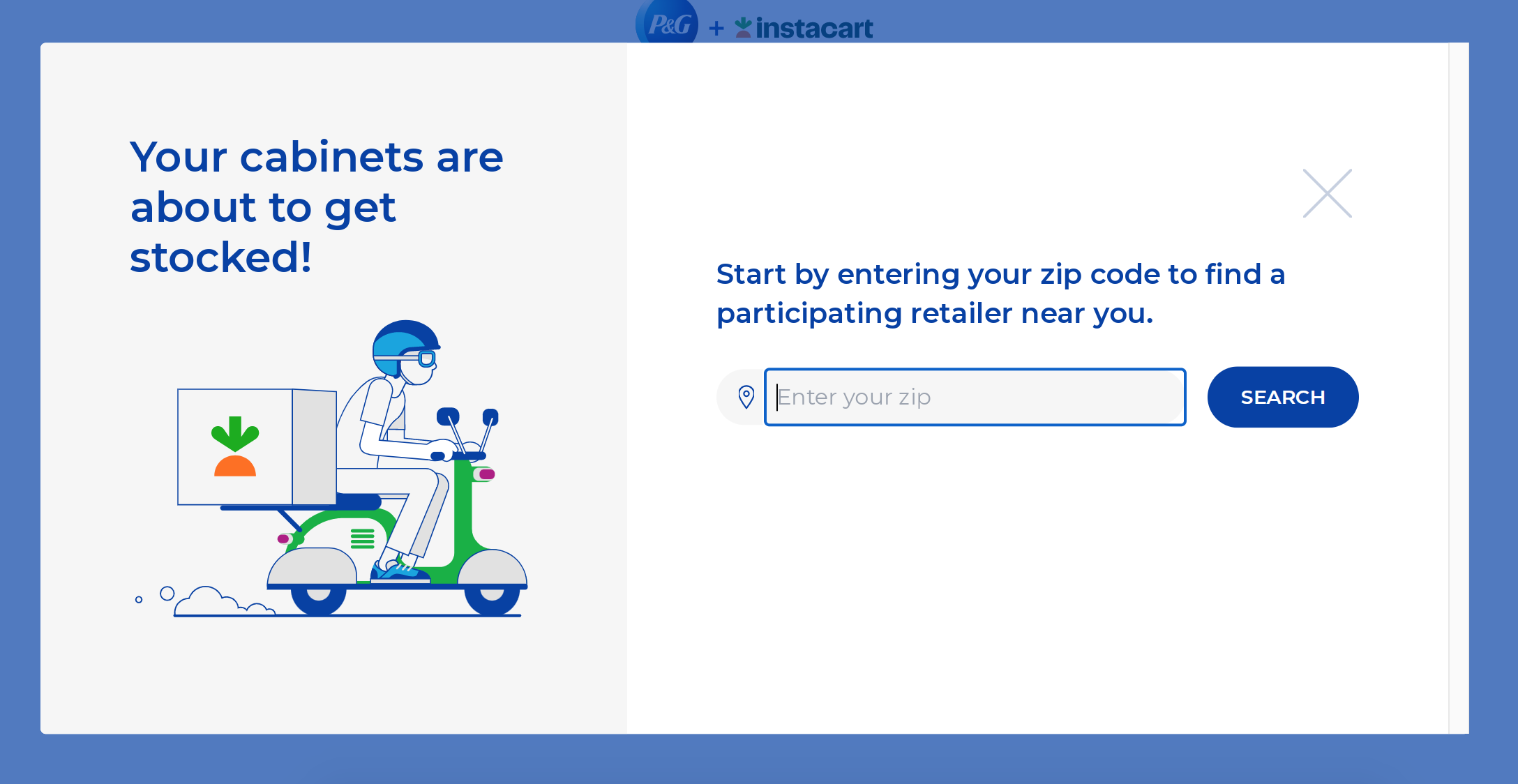
Step 3: UX writing
I then wrote UX copy tailored to each scenario, ultimately helping to bridge the gap between the microsite and Instacart.
Bonus: For an additional sales lift, I provided the user with an Instacart feature tip for favoriting the items for future purchase and placement on the digital shelf.